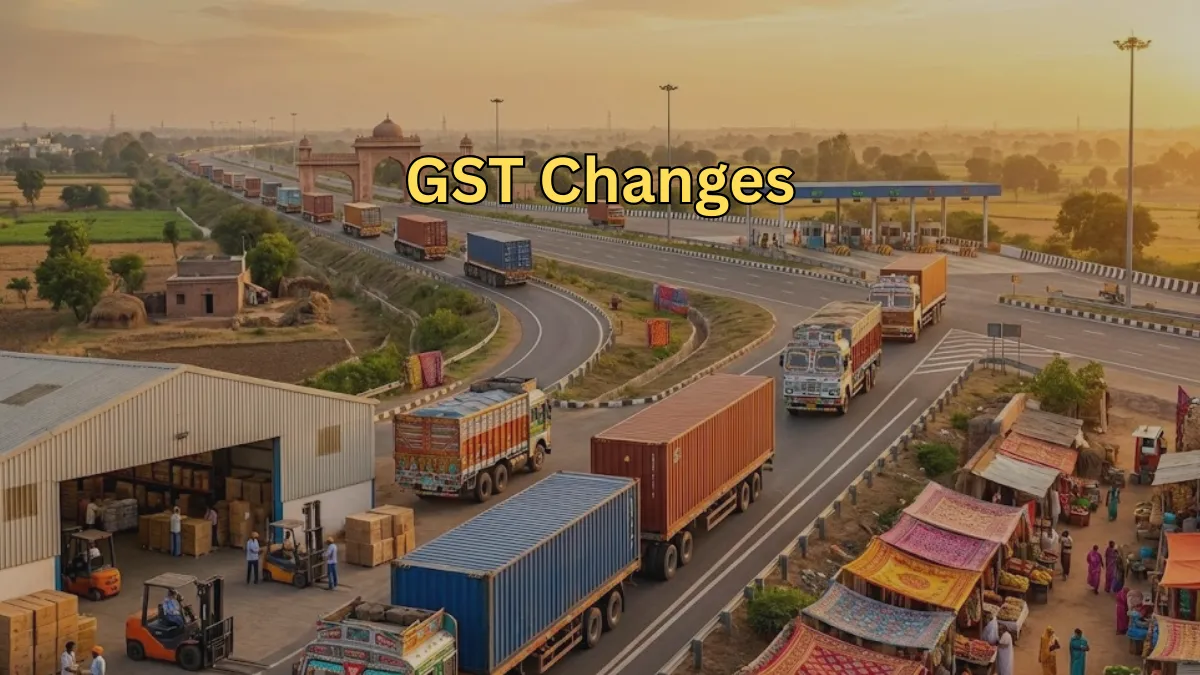
The logistics industry, often called the backbone of trade and commerce, is extremely sensitive to tax policies. In February 2026, the government implemented key GST (Goods and Services Tax) changes that are poised to reshape how logistics companies operate across India and even affect global trade partnerships.
But what do these changes really mean, and how will they impact logistics firms, freight operators, and supply chain managers? Let’s break it down in a simple, practical way.
Samajhna GST Changes Ko
GST has always been designed to streamline indirect taxation and reduce cascading taxes. The recent updates include:

- Rate Rationalization: Certain freight services now attract a lower GST rate, while others remain unchanged.
- Input Tax Credit (ITC) Adjustments: Eligibility for claiming ITC on logistics-related expenses has become stricter, requiring detailed documentation.
- E-Invoicing and Compliance Expansion: More businesses, including medium and smaller logistics operators, must now adhere to e-invoicing norms.
- Digital Tracking for Taxation: The government is leveraging AI-driven GST compliance systems to monitor transactions in real time.
These updates are aimed at increasing transparency, reducing tax evasion, and encouraging formalization of logistics operations.
Logistics Industry Par Seedha Asar
1. Operational Cost Changes
One of the most immediate impacts of the GST updates is on operational costs:

- Freight companies providing services now taxed at lower GST rates can pass on savings to clients.
- Companies facing ITC restrictions may experience higher effective tax rates, increasing their expenses.
- Digital compliance requirements may increase administrative overhead, especially for smaller operators.
For example, if a trucking company previously claimed ITC on fuel and maintenance but now faces stricter documentation rules, their net cost per kilometer may rise, affecting profitability.
2. Pricing and Service Structuring
With rate changes, logistics providers may need to rethink their pricing strategies:
- Bundled logistics services may need recalibration to remain competitive.
- Dynamic pricing models, which factor in GST costs in real time, will become more important.
- Clients may demand clearer breakdowns of GST to understand the cost-to-service ratio.
These changes encourage a more transparent market, which benefits businesses and end customers alike.
3. Digital Transformation Acceleration
E-invoicing and AI-driven tax tracking mean logistics companies must embrace technology faster:
- Cloud-based accounting and fleet management systems are now almost mandatory.
- Real-time GST compliance reporting reduces errors but requires training and software investment.
- Smaller players who delay adoption may face penalties or slowed operations.
This trend pushes the logistics sector toward modernization, improving efficiency and reducing manual errors.
4. Supply Chain Optimization
Changes in GST affect not just individual companies but entire supply chains:
- Companies may prefer routes or partners that offer GST-efficient services.
- Warehousing strategies may shift based on regional GST benefits.
- Cross-border logistics involving exports or imports must be recalculated to optimize tax liability.
In practice, a supply chain manager might reroute shipments through states with more favorable GST conditions or adjust inventory locations to maximize ITC benefits.
Practical Steps for Logistics Companies
To navigate the new GST landscape effectively, logistics operators can adopt these actionable strategies:
- Invest in Compliance Software: Modern accounting tools with GST modules help track eligibility for ITC and automate e-invoicing.
- Train Teams: Staff handling finance and operations need updated knowledge of GST regulations.
- Review Pricing Models: Adjust freight rates and service charges to reflect new GST impacts while staying competitive.
- Optimize Supply Chains: Analyze routes, warehousing, and vendor choices to minimize tax burdens.
- Regular Audit and Documentation: Keep invoices, receipts, and ITC claims meticulously documented to avoid compliance issues.
These steps not only ensure regulatory compliance but also improve efficiency and profitability.
Emerging Opportunities
Despite challenges, the GST changes bring growth opportunities:
- Formalization Boost: Small and medium operators who comply with new rules may gain credibility and larger contracts.
- Digital Innovation: Companies that invest in AI and cloud technologies can reduce errors, save costs, and gain a competitive edge.
- Cross-Border Trade Advantage: Streamlined GST and ITC processes simplify export and import logistics.
- Market Differentiation: Transparency in pricing and tax compliance can become a unique selling point.
Companies that proactively adapt can turn these regulatory shifts into a strategic advantage.
Real-World Example
Consider a logistics firm handling e-commerce shipments across India:
- Before the update, claiming ITC on fuel was simple, but now stricter documentation is needed.
- The company invests in a cloud-based compliance system and trains its accounting team.
- With rate rationalization on certain freight services, they offer competitive pricing to e-commerce clients, improving client retention.
- Digital invoicing reduces manual errors and accelerates payments.
This proactive approach ensures compliance while enhancing operational efficiency.
Conclusion
GST changes in February 2026 are more than just regulatory updates—they are a catalyst for transformation in the logistics industry. While operational costs, pricing, and compliance requirements are evolving, companies that embrace technology, optimize supply chains, and stay informed can gain a clear competitive advantage. Understanding these changes, taking actionable steps, and adapting strategically will define the future leaders in logistics.
Key Takeaways
- Rate rationalization can reduce costs for some freight services.
- Stricter ITC rules require meticulous documentation.
- Digital compliance and e-invoicing are now essential.
- Supply chain strategies must be revisited to maximize efficiency.
- Proactive adaptation creates both compliance and competitive advantages.