Running a small business is hard. Getting products from point A to point B? Even harder. For Micro, Small, and Medium Enterprises (MSMEs), logistics is often the biggest silent expense—fuel costs, warehousing, shipping delays, compliance paperwork, and technology gaps all add up. In today’s fast-moving economy, especially with the rise of e-commerce and global trade, efficient logistics is no longer optional. It’s survival.
That’s where government-backed schemes come in. Across major economies like the United States and India, policymakers have recognized that supporting MSME logistics isn’t just about helping small businesses—it’s about strengthening supply chains, boosting exports, and creating jobs.
In this article, we’ll break down the most impactful government schemes supporting MSME logistics, explain how they work, and show how business owners can actually benefit from them.
Why MSME Logistics Needs Policy Support
Logistics can account for 10% to 20% of total operating costs for small manufacturers and retailers. For MSMEs, this burden is heavier because they often lack:
- Bulk shipping discounts
- Access to advanced logistics software
- Strong warehousing networks
- Affordable credit for fleet expansion
Governments step in to bridge this gap through:
- Financial assistance
- Infrastructure development
- Digital enablement
- Export incentives
- Credit guarantees
Let’s explore how this plays out in real programs.
United States: Federal Support for Small Business Logistics
Small Business Administration (SBA) Programs
The U.S. Small Business Administration plays a central role in supporting logistics indirectly through financing.
Key logistics-friendly programs include:
- 7(a) Loan Program – Can be used to buy delivery vehicles, warehouse equipment, or inventory systems.
- 504 Loan Program – Ideal for purchasing commercial real estate, including storage facilities.
- Microloan Program – Helps startups acquire inventory or small-scale logistics tools.
For example, a small food distributor can use SBA-backed financing to upgrade cold storage units or invest in route optimization software. That reduces spoilage and delivery delays—both major logistics pain points.
Infrastructure Investment and Jobs Act
The Infrastructure Investment and Jobs Act allocated over $1 trillion toward roads, bridges, ports, and rail systems. While not MSME-specific, it directly benefits small logistics operators by:
- Reducing transit delays
- Improving rural connectivity
- Expanding port capacity
Small trucking companies, especially in rural states, report measurable savings in fuel and time when road quality improves.

Export Assistance and Trade Support
Through the U.S. Department of Commerce and Export-Import Bank initiatives, MSMEs gain access to:
- Export credit insurance
- Trade financing
- Global shipping advisory support
These programs reduce risk when shipping internationally—critical for small businesses entering foreign markets.
India: Dedicated Schemes for MSME Logistics
India has taken a more direct, scheme-based approach to MSME logistics.
Prime Minister’s Gati Shakti Initiative
The PM Gati Shakti aims to integrate transport planning across highways, railways, ports, and airports using digital mapping.
Why this matters for MSMEs:
- Reduced turnaround times
- Lower freight costs
- Better warehouse connectivity
- Seamless multimodal transport
It uses GIS-based planning to ensure logistics hubs are strategically placed. This reduces fragmentation in supply chains.
Production Linked Incentive (PLI) Scheme
The Production Linked Incentive Scheme supports domestic manufacturing sectors like electronics, pharmaceuticals, and automotive.
While primarily production-focused, it indirectly boosts MSME logistics by:
- Encouraging domestic supply chains
- Supporting warehouse expansion
- Driving demand for freight services
When local production rises, transportation networks expand with it.
Credit Guarantee Fund Trust for Micro and Small Enterprises (CGTMSE)
The Credit Guarantee Fund Trust for Micro and Small Enterprises provides collateral-free credit guarantees.
Logistics-related benefits include:
- Funding for delivery fleets
- Investment in packaging units
- Adoption of digital logistics tools
This reduces one of the biggest barriers—access to capital.
Digital Logistics Support Programs
Modern logistics runs on data. Governments now focus heavily on digital transformation.
Digital Freight Platforms and Tech Grants
In the U.S., several states offer:
- Grants for supply chain digitization
- Tax credits for warehouse automation
- Support for cloud-based inventory systems
India promotes:
- E-way bill digitization
- Unified logistics interfaces
- GST-based freight tracking
These tools increase transparency and reduce compliance headaches.
Financial Incentives for Green Logistics
Sustainability is a growing focus in 2026. Many governments now incentivize eco-friendly logistics.
In the U.S.:
- Federal tax credits for electric delivery vehicles
- State-level EV fleet subsidies
- Clean transportation grants
In India:
- Subsidies under EV adoption policies
- Support for electric cargo vehicles
- Urban freight electrification pilots
Green logistics not only lowers emissions but also reduces long-term fuel costs—an increasingly attractive proposition for MSMEs facing volatile fuel prices.
Warehousing and Cluster Development
Governments also encourage logistics clustering.
Industrial parks and MSME clusters often include:
- Shared warehousing
- Cold storage facilities
- Integrated freight terminals
- Common packaging units
This shared infrastructure reduces overhead costs dramatically.
For example, textile MSME clusters in manufacturing regions benefit from common export processing zones, which streamline documentation and customs clearance.
Practical Tips for MSMEs to Leverage Government Logistics Schemes
Knowing about schemes is one thing. Using them effectively is another.
Here’s how small businesses can maximize benefits:
1. Conduct a Logistics Audit
Understand where money is leaking—fuel, delays, returns, storage, or inventory inefficiency.
2. Match Needs to Schemes
If capital is the issue, look for loan guarantees. If delays are the issue, explore infrastructure-linked incentives.
3. Stay Updated
Policies evolve. Many schemes expand annually based on budget announcements.
4. Partner with Industry Associations
Trade groups often simplify application processes and share compliance insights.
5. Invest in Digital Readiness
Most modern schemes favor technology adoption. Being digitally prepared improves eligibility.
Emerging Trends in 2026
Governments are now focusing on:
- AI-powered supply chain planning
- Real-time freight visibility
- Drone delivery pilots
- Cross-border digital trade corridors
MSMEs that align early with these priorities are more likely to receive funding and support.
Supply chain resilience has become a national priority after pandemic disruptions and geopolitical tensions. As a result, policy support for MSME logistics is stronger and more strategic than ever.
Why This Matters for the Broader Economy
When MSMEs thrive:
- Employment rises
- Regional development improves
- Exports expand
- Inflationary pressures ease
Logistics efficiency is not just a business issue—it’s a national competitiveness issue.
Governments recognize that small businesses collectively form the backbone of economic growth. Supporting their logistics capabilities strengthens the entire supply chain ecosystem.
Summary: Key Takeaways
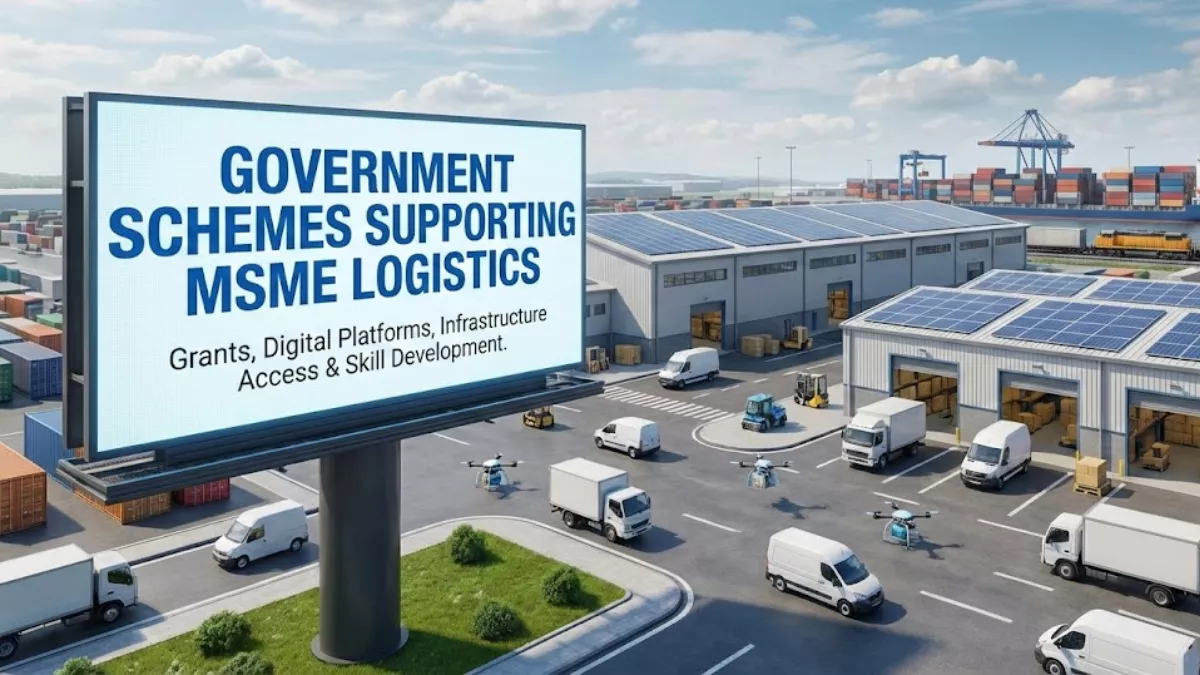
Government schemes supporting MSME logistics focus on four main pillars: financing, infrastructure, digitization, and sustainability.
In the U.S., the SBA and federal infrastructure investments reduce operational bottlenecks and expand access to capital. In India, integrated programs like PM Gati Shakti and credit guarantee schemes directly address supply chain inefficiencies.
MSMEs that proactively explore loan guarantees, infrastructure benefits, export assistance, and digital incentives can significantly lower logistics costs and improve delivery performance.
In 2026, with global trade shifting and supply chains evolving, government-backed logistics support is not just helpful—it’s strategic.
Businesses that leverage these programs gain cost advantages, resilience, and long-term growth potential.