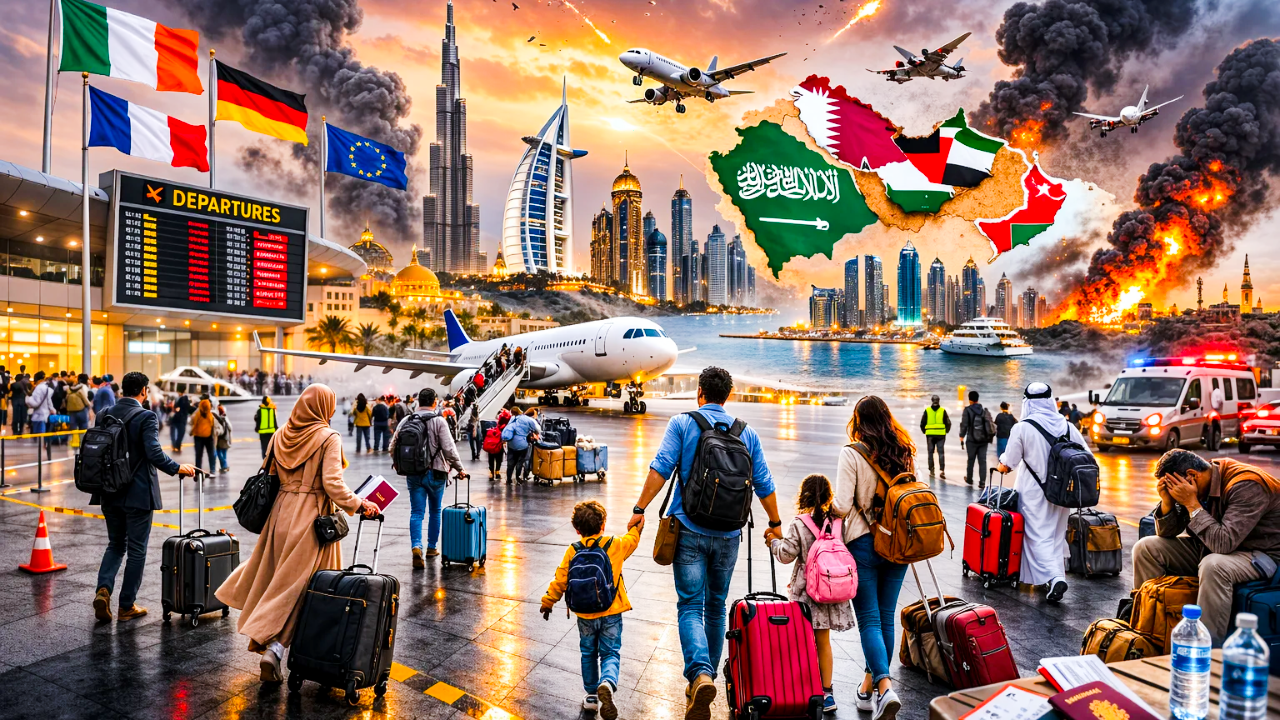
It began slowly with scattered alerts, a few flight delays, and rising tension in the news. But within just a few days, the situation turned into a serious crisis. Airports became crowded, departure boards were filled with cancellations, and thousands of travelers were left confused about how and when they could return home. A region once known as one of the safest and most luxurious travel destinations has now become uncertain and risky.
Ireland has now joined a growing list of countries taking urgent action. Along with Germany, France, Sweden, India, South Korea, and Australia, it is working together to evacuate citizens and stop travel to major Gulf countries like Qatar, UAE, Saudi Arabia, Kuwait, and Oman. This is not just a precaution—it is a response to a rapidly developing crisis that has changed travel in the region almost overnight.
From Dream Destinations To Danger Zones
For many years, the Gulf region was seen as a symbol of modern travel. Cities like Dubai and Doha were not just destinations, but a complete travel experience. People visited for the skyline, shopping, culture, and most importantly, the strong sense of safety and comfort.

Dubai was popular for its tall buildings and family-friendly attractions. Doha built its reputation through culture and global events. Saudi Arabia was opening up to tourism, while Oman and Kuwait attracted visitors with their calm and relaxing environment.
However, everything changed quickly. Rising tensions between Iran, Israel, and the United States had a strong impact on the region. Missile threats, airspace closures, and security concerns turned these popular places into areas people wanted to leave as soon as possible.

The Moment Everything Shifted
The major turning point came when airspace restrictions were introduced. Flights were delayed, rerouted, or canceled completely. Airports that once operated smoothly turned into places of confusion and chaos.
Travelers experienced long waiting times, unclear instructions, and growing stress. Some were stuck in transit, while others stayed in hotels trying to plan their next move. Airlines also struggled as many routes became unsafe.

Ireland Steps Forward With Emergency Action
Ireland acted quickly by issuing strong travel warnings and asking its citizens to leave the region immediately.
Working with European partners, Ireland helped organize evacuation plans. Embassies contacted citizens directly, guided them, and arranged emergency flights to bring them home safely. This clearly showed that the situation had reached a critical level.

Europe Moves In Sync
Germany, France, and Sweden also took similar steps. They launched evacuation flights and advised their citizens not to delay leaving.
People were assisted from airports, hotels, and even private homes. Embassies became lifelines, helping travelers deal with a situation that was changing rapidly.

Germany issued one of the strongest warnings, urging immediate departure. France worked closely with airlines to ensure safe travel routes, while Sweden made sure its citizens were not left behind.
Asia-Pacific Nations Join The Effort
The response was not limited to Europe. Countries across Asia and the Pacific also acted quickly.
India started a large-scale effort to bring back its citizens, arranging special flights and opening communication channels. South Korea issued high-level alerts asking people to leave, and Australia advised against all travel while working to bring its citizens home safely.
Tourism Comes To A Standstill
The tourism industry has been hit hard. Places that once welcomed millions of visitors are now unusually quiet.
Dubai’s airport has seen many cancellations. Hotels that were once full are now dealing with empty rooms. Events and conferences have been postponed.
In Qatar, growth after major global events has slowed. Saudi Arabia’s tourism plans have also been affected, with both leisure and religious travel facing disruption. Oman and Kuwait are also seeing declining visitor numbers.
A Shift In How People See Safety
The biggest change is in how people view safety.
The Gulf region was known for stability, which made it a preferred choice for travel and work. Now, that sense of security has been shaken.
When flights become uncertain and news reports talk about conflict, people hesitate. Travel decisions depend heavily on how safe a place feels, and right now, that confidence has dropped.
What Happens Next
For now, the main focus is on bringing people home safely. Evacuation efforts are ongoing, and governments are closely monitoring the situation.
The bigger question is what comes next. Rebuilding trust will take time. Tourism can recover, but only when travelers feel safe again.
The Gulf region has faced challenges before and shown strength. Whether it can recover again depends on how the situation develops in the coming months.
One thing is certain—this moment has changed global travel perception of the region. For thousands of travelers caught in the middle, it is a reminder that even the most familiar places can change very quickly.