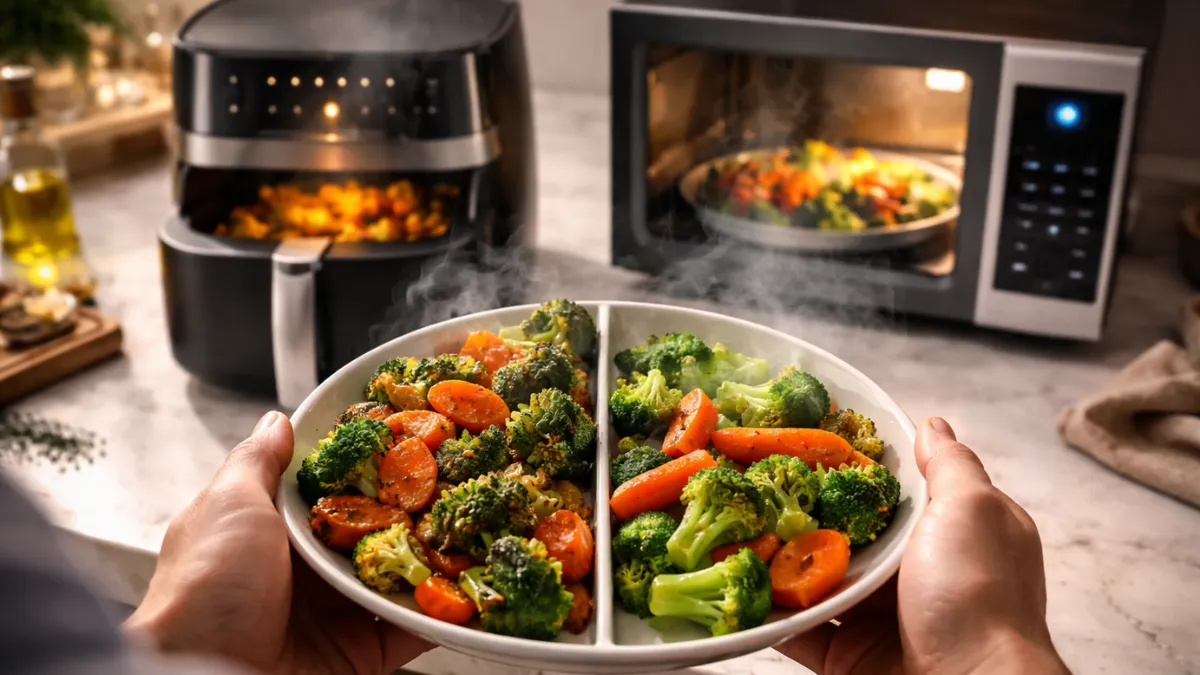
When it comes to quick and convenient cooking, two kitchen appliances dominate modern homes: the air fryer and the microwave. Both promise speed, efficiency, and healthier meals—but which one actually does a better job of preserving nutrients in your food? This question matters more than ever as people become increasingly conscious about nutrition and cooking methods.
Understanding how these appliances work and how they affect vitamins, minerals, and overall food quality can help you make smarter choices in your kitchen.
How Cooking Methods Affect Nutrients
Before comparing appliances, it’s important to understand that nutrients are sensitive to heat, water, and cooking time. Vitamins like vitamin C and B-complex are especially fragile and can break down easily during cooking.

In general:
- High heat for long periods reduces nutrients
- Water-based cooking can leach vitamins into liquids
- Shorter cooking times help retain more nutrients
With this in mind, let’s explore how air fryers and microwaves stack up.

What Happens Inside an Air Fryer?
An air fryer works by circulating hot air rapidly around food, creating a crispy texture similar to frying but with little to no oil. It typically operates at high temperatures (around 180–200°C or 356–392°F).
Nutrient Impact of Air Frying
Air frying has both advantages and drawbacks when it comes to nutrient retention:

Pros:
- Requires minimal oil, preserving the natural composition of food
- Faster than oven baking, reducing nutrient loss
- Retains fat-soluble vitamins like A, D, E, and K well
Cons:

- High temperatures may reduce heat-sensitive vitamins like vitamin C
- Prolonged cooking or overcooking can lead to nutrient degradation
For foods like vegetables, air frying can preserve texture and flavor, but some delicate nutrients may still be lost due to high heat exposure.
What Happens Inside a Microwave?
Microwaves cook food using electromagnetic waves that excite water molecules, generating heat from within the food itself. This results in faster cooking times and less need for added water.

Nutrient Impact of Microwaving
Microwaving is often misunderstood, but it’s actually one of the best methods for preserving nutrients.
Pros:
- Very short cooking time reduces nutrient breakdown
- Minimal or no water prevents vitamin loss through leaching
- Even heating helps maintain overall nutritional value
Cons:
- Uneven cooking in some cases may affect food quality
- Overheating can still degrade sensitive nutrients
Studies consistently show that microwaving retains more water-soluble vitamins compared to boiling or frying, making it a strong contender for nutrient preservation.
Air Fryer vs Microwave: Direct Comparison
1. Cooking Time
Microwaves cook significantly faster than air fryers. Shorter cooking time generally means better nutrient retention, giving microwaves an edge.
2. Temperature
Air fryers use high temperatures, which can damage sensitive vitamins. Microwaves use lower effective heat over shorter periods, which helps preserve nutrients.
3. Water Usage
Microwaves require little to no water, reducing nutrient loss. Air fryers also don’t use water, but their high heat can still impact delicate nutrients.
4. Food Type Matters
- Vegetables: Microwaving usually preserves more vitamins
- Meats: Air frying can retain protein quality and reduce fat
- Frozen foods: Both methods perform well, but microwaves are faster
Which Method Is Healthier Overall?
If the goal is strictly nutrient preservation, microwaving generally comes out ahead due to its shorter cooking time and lower nutrient loss. However, that doesn’t mean air fryers are unhealthy.
Air fryers shine when it comes to:
- Reducing oil consumption
- Creating appealing textures without deep frying
- Cooking proteins efficiently
Microwaves excel in:
- Preserving vitamins, especially in vegetables
- Speed and convenience
- Minimal nutrient loss
Practical Tips to Maximize Nutrients
No matter which appliance you use, a few simple habits can help you retain more nutrients:
- Avoid overcooking your food
- Use minimal water when cooking vegetables
- Cut food into larger pieces to reduce nutrient exposure
- Cook only until done, not beyond
- Use microwave-safe covers to retain moisture and nutrients
Final Verdict
Both air fryers and microwaves have their place in a healthy kitchen. If your main focus is preserving nutrients, especially in vegetables, the microwave is the better choice. Its quick cooking time and minimal water usage make it highly efficient at retaining vitamins.
However, if you’re aiming for better texture, lower oil intake, and versatility in cooking, the air fryer is a great option. The key is not to rely on just one method but to use each appliance where it performs best.
A balanced approach—using a microwave for quick reheating and nutrient-sensitive foods, and an air fryer for crisp, low-oil meals—can give you the best of both worlds.
FAQ’s
Does microwaving destroy nutrients in food?
No, microwaving preserves most nutrients due to short cooking time and minimal water use, making it one of the healthiest cooking methods available.
Is air frying healthier than microwaving?
Air frying reduces oil and improves texture, but microwaving retains more nutrients, especially vitamins sensitive to heat and long cooking times.
Which is better for cooking vegetables?
Microwaving is better for vegetables as it preserves water-soluble vitamins like vitamin C and B vitamins more effectively than air frying.
Can air fryers retain nutrients in food?
Yes, air fryers retain many nutrients, especially fat-soluble ones, but high heat can reduce delicate vitamins if food is overcooked.