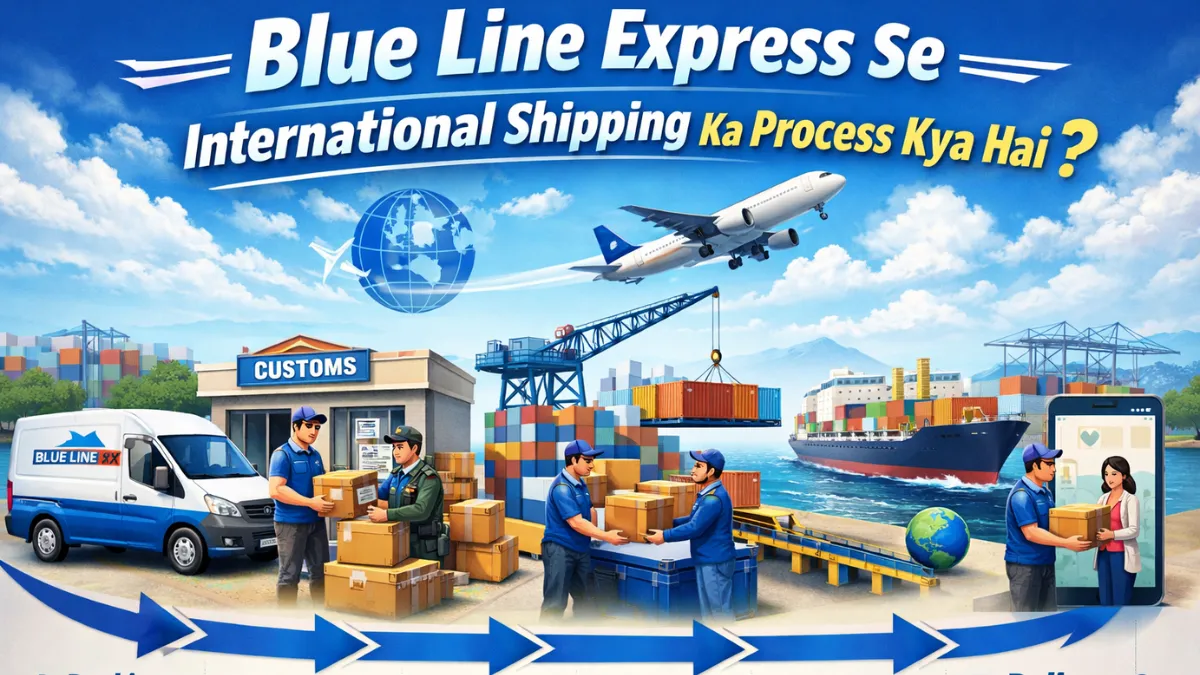
In 2026, international shipping is no longer just for large exporters. Small Indian businesses, e-commerce sellers, students, and even families regularly send parcels overseas. With global marketplaces expanding and Indian MSMEs targeting buyers in the U.S., UK, UAE, Canada, and Australia, understanding the shipping process has become a competitive advantage. If you are planning to send commercial cargo or personal shipments abroad, knowing how the system works can save you time, money, and legal trouble.
This article explains the complete international shipping process through Blue Line Express Cargo Pvt. Ltd., step by step, in a practical and easy-to-understand way. You will learn how booking works, what documents are required, how customs clearance happens, how pricing is calculated, and what common mistakes to avoid. By the end, you will clearly understand how to ship internationally from India with confidence and compliance.
Understanding Blue Line Express Cargo Pvt. Ltd.
Blue Line Express Cargo Pvt. Ltd. is an India-based logistics and freight forwarding company that handles international courier, cargo, and freight services. Like most established freight providers, it typically manages shipments by air cargo, sea freight, and express courier networks, depending on weight, urgency, and destination country.

In 2026, logistics companies in India operate within strict customs regulations, global security standards, and digital documentation frameworks. That means shipping is faster and more transparent than it was five years ago, but documentation accuracy is more important than ever. A professional logistics partner coordinates pickup, documentation, customs clearance, airline or shipping line booking, and final delivery through overseas partners.
Why International Shipping Knowledge Matters in 2026
Global trade policies are continuously evolving. E-commerce exports from India are rising due to digital payment integration and simplified export schemes. However, customs authorities worldwide are using automated scanning and AI-based risk assessment tools. Even a small documentation error can cause delays, penalties, or returns.

For Indian exporters and individuals, understanding the process ensures smoother clearance and avoids unexpected charges. Whether you are sending garments to the U.S., machinery parts to Germany, or personal goods to Canada, preparation makes all the difference.
Step 1: Shipment Inquiry and Booking
The process usually starts with an inquiry. You provide shipment details such as type of goods, weight, dimensions, destination country, and whether the goods are commercial or personal. Based on this, the logistics provider suggests the most suitable mode of transport.

Air freight is ideal for urgent shipments, while sea freight is cost-effective for bulk cargo. Express courier is best for small parcels. Once you confirm pricing and service terms, the booking is created in the system.
At this stage, you should verify estimated transit time, cut-off dates, and whether customs duties are prepaid or payable at destination.

Step 2: Documentation Preparation
Documentation is the most critical part of international shipping. Incorrect paperwork causes most delays.
For commercial shipments, you generally need:

Commercial invoice describing goods clearly
Packing list with weight and dimensions
IEC (Import Export Code) of exporter
GST details if applicable
Shipping bill generated via Indian customs system
KYC documents
For personal shipments, KYC documents such as Aadhaar or passport and a declaration form are required.
Goods description must be accurate and specific. For example, writing “electronics” is too vague. Instead, specify “Bluetooth headphones with lithium-ion battery.” Customs authorities evaluate goods classification using HS codes, which determine duty rates.
In 2026, most documentation is digitally filed through India’s customs portal, which reduces paperwork but increases scrutiny for mismatched details.
Step 3: Pickup and Warehouse Processing
Once documents are ready, cargo pickup is scheduled. The shipment is transported to a consolidation warehouse. Here, goods are weighed, measured, and checked for packaging compliance.
Proper packaging is mandatory. Fragile goods require cushioning. Liquids must be sealed properly. Lithium batteries must follow international aviation safety rules.
At the warehouse, labels are generated with tracking numbers. These tracking systems allow you to monitor shipment progress online. Digital tracking is now standard in the logistics industry and increases transparency for customers.
Step 4: Customs Clearance in India
Before leaving India, shipments must clear export customs. The logistics provider files the shipping bill electronically. Customs officers may conduct physical inspection if required.
Clearance depends on accurate valuation and compliance. If goods are under-declared in value, customs can impose penalties. If goods fall under restricted categories, additional approvals may be required.
Once customs approves the shipment, it is released for airline or shipping line loading.
In 2026, Indian customs increasingly use risk-based profiling, meaning regular exporters with clean records face fewer inspections. Maintaining compliance builds long-term credibility.
Step 5: International Transit
After clearance, goods are handed to airlines or shipping lines.
For air cargo, shipments move through international airports and typically reach destination countries within a few days. Sea freight may take several weeks depending on route and port congestion.
Transit times depend on:
Mode of transport
Destination country
Weather and geopolitical factors
Customs workload
Real-time tracking allows customers to see movement updates. However, international transit can sometimes face unavoidable delays due to global trade disruptions.
Step 6: Destination Customs Clearance
Once goods arrive in the destination country, they undergo import customs clearance. Duties and taxes are calculated based on declared value and local regulations.
In some cases, duties are prepaid by the sender. In others, the receiver must pay before delivery.
If documents match and duties are paid, customs releases the shipment for last-mile delivery. If discrepancies are found, customs may request clarification or additional documents.
Accurate documentation from the beginning significantly reduces destination delays.
Step 7: Final Delivery
After clearance, local delivery partners transport the shipment to the consignee’s address.
For commercial shipments, delivery confirmation may include proof of delivery signature. For personal shipments, ID verification may be required.
At this stage, the shipping process is complete.
How Shipping Charges Are Calculated
International shipping costs depend on multiple factors.
Air freight uses volumetric weight calculations. If the package occupies more space than its actual weight suggests, pricing is based on dimensional weight.
Sea freight pricing depends on container size, LCL (less than container load) volume, and freight rates.
Other cost components include:
Fuel surcharge
Customs handling fees
Documentation charges
Insurance
Destination handling charges
Always request a detailed quotation to understand cost breakdown.
Common Mistakes to Avoid
One major mistake is incorrect goods description. Vague or misleading declarations trigger customs scrutiny.
Another common issue is poor packaging. Damaged goods may not qualify for compensation if packaging was inadequate.
Underestimating transit time can also create business disruptions. Always plan buffer days for customs clearance.
Finally, ignoring insurance is risky. Cargo insurance protects against loss or damage during transit.
Real-World Example
Suppose an Indian garment exporter in Delhi ships fashion products to New York. They provide detailed invoices, correct HS codes, and proper labeling. Customs clearance in India happens within 24 hours. Air freight reaches the U.S. in four days. Import duties are prepaid. Delivery is completed in seven days total.
In contrast, if the invoice simply says “clothes,” customs may request clarification, delaying clearance by several days.
Preparation determines success.
Regulatory Compliance in 2026
India’s export system is increasingly digitized. IEC registration remains mandatory for commercial exports. GST integration allows better tracking of export incentives.
Internationally, stricter anti-counterfeit laws and safety compliance rules require accurate product documentation.
Logistics providers play a key role in guiding exporters through these regulatory frameworks.
Tips for Smooth International Shipping
Start documentation early and double-check invoice accuracy. Ensure packaging meets international standards. Discuss insurance coverage clearly. Track shipment regularly and stay in communication with your logistics provider.
If you are a business owner, maintain consistent export records. A clean compliance history reduces inspections over time.
Understanding each stage helps you avoid costly surprises.
Key Takeaways and Practical Next Steps
International shipping through a professional logistics company involves structured steps: inquiry, documentation, pickup, customs clearance, transit, destination clearance, and final delivery. Every stage requires accuracy and compliance.
For Indian exporters and individuals in 2026, preparation is the biggest advantage. Proper invoices, correct HS codes, compliant packaging, and realistic timelines ensure smooth movement of goods across borders.
If you plan to ship internationally, begin by confirming product classification, preparing accurate documentation, and discussing duty structure with your logistics partner. Always request a transparent cost breakdown and consider insurance for valuable shipments.
With the right knowledge and preparation, international shipping becomes a manageable and predictable process rather than a stressful experience.
FAQs
What documents are required for international shipping from India?
Commercial invoice, packing list, IEC, KYC documents, and shipping bill are typically required for smooth export clearance.
How long does international shipping usually take?
Air freight takes 3–7 days on average, while sea freight may take 2–6 weeks depending on route and customs clearance.
How are international shipping charges calculated?
Charges depend on weight, volumetric size, destination, mode of transport, fuel surcharge, and customs handling fees.
Do I need insurance for international cargo?
Cargo insurance is optional but strongly recommended to protect against loss, theft, or damage during transit.