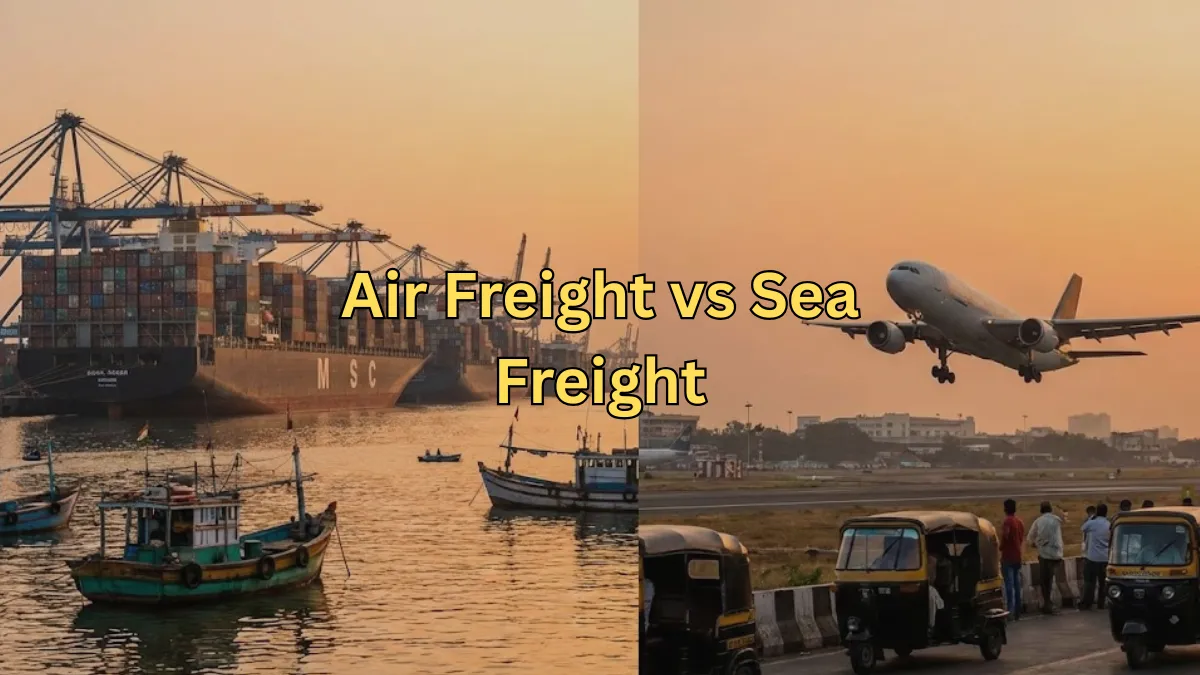
When it comes to moving goods across the globe, businesses and individuals face a common dilemma: should they choose air freight or sea freight? Each mode of transport has its own advantages and trade-offs, and the right choice can save you both time and money.
With global trade expanding rapidly and e-commerce booming, understanding the differences between air and sea shipping has never been more important. This article will break down everything you need to know in a simple, practical way so you can make an informed decision.
What is Air Freight?
Air freight refers to transporting goods using cargo airplanes. It’s often the preferred choice for high-value, time-sensitive shipments. From electronics to fresh produce, air freight ensures goods move quickly across continents. Airlines operate on strict schedules, meaning your shipment is more predictable compared to sea transport.

Key Features of Air Freight
- Speed: Typically 1–7 days depending on origin and destination.
- Reliability: Less affected by weather or delays compared to sea transport.
- Security: Airports have stringent safety protocols, reducing theft or damage risk.
- Ideal for: Urgent, lightweight, and high-value items like medical equipment or electronics.
What is Sea Freight?
Sea freight involves transporting goods via cargo ships. It’s the backbone of international trade, responsible for over 80% of global goods movement by volume. From raw materials to large machinery, sea freight is suitable for bulk shipments and non-urgent deliveries.
Key Features of Sea Freight
- Economical: Significantly cheaper than air freight, especially for large volumes.
- Capacity: Can carry massive quantities, including oversized items.
- Flexibility: Options for full container load (FCL) or less than container load (LCL).
- Ideal for: Heavy, non-perishable, or bulk goods like furniture, vehicles, or raw materials.
Speed Comparison: Who Wins?
If your priority is speed, air freight clearly takes the lead. A shipment that takes 30–45 days by sea can often reach its destination in 2–7 days by air. For businesses dealing with time-sensitive orders, seasonal products, or urgent stock replenishment, air freight is unbeatable.
However, sea freight is improving with modern logistics solutions. Some routes now offer slightly faster shipping, but it still cannot match the sheer speed of air transport. The choice boils down to whether your shipment can afford the extra time.
Cost Comparison: Where Money Matters
Sea freight shines when it comes to cost. Transporting a ton of goods by sea can be 4–10 times cheaper than air freight. Shipping by air is more expensive because it involves higher fuel costs, airport fees, and strict security measures.

Here’s a quick cost breakdown for a hypothetical shipment of 1 ton from the US to Europe:
- Air Freight: $4,000–$6,000
- Sea Freight (FCL): $400–$600
Clearly, for non-urgent bulk shipments, sea freight is the economical choice. Small businesses or startups shipping high-volume goods can save a fortune by choosing sea transport over air.

Factors to Consider Before Choosing
Making the right choice isn’t just about speed and cost. Other factors can influence the decision:
1. Nature of Goods
- Perishable items like fruits, flowers, or pharmaceuticals benefit from air freight.
- Heavy, durable items like steel or furniture are more cost-effective by sea.
2. Shipment Size
- Small packages are often better suited for air freight.
- Large or bulk shipments are almost always cheaper by sea.
3. Environmental Impact
Air freight has a significantly higher carbon footprint than sea transport. For businesses focused on sustainability, sea freight is often the better choice.

4. Reliability & Risk
- Air shipments are less likely to face delays and are closely monitored.
- Sea shipments can be delayed due to weather, port congestion, or customs.
5. Destination Accessibility
- Some inland destinations may require additional transport from ports, adding time and cost for sea freight.
- Air freight can reach most international destinations directly.
Real-World Example
Imagine a company in California shipping 500 kg of organic skincare products to London. They need the products to reach retailers in under a week. Air freight is the clear winner for speed, ensuring freshness and timely delivery.
On the other hand, if the same company is shipping 20 tons of raw materials for packaging, sea freight is far more economical. Even if it takes a month, the cost savings outweigh the slower delivery.
Tips to Optimize Shipping
- Combine Modes: Some businesses use a hybrid approach, sending urgent items by air and bulk goods by sea.
- Plan Ahead: Early planning reduces last-minute costs and delays.
- Work with Reliable Freight Forwarders: Experienced partners can help navigate customs, packaging, and documentation efficiently.
- Negotiate Rates: Both air and sea freight providers offer volume discounts or seasonal rates.
- Track Shipments: Real-time tracking improves visibility and reduces surprises, especially for air shipments.
When to Choose Air Freight
- Urgent shipments or stock replenishment
- High-value goods
- Perishable items needing fast delivery
- Small packages that justify higher cost
When to Choose Sea Freight
- Large, bulky, or heavy shipments
- Non-perishable goods
- Cost-sensitive operations
- Businesses with flexible delivery timelines
Key Takeaways
- Air freight is fast, secure, and ideal for urgent, high-value shipments.
- Sea freight is economical, ideal for bulk goods, and has a lower environmental impact.
- Choosing between air and sea freight depends on your priorities: speed, cost, cargo type, and environmental considerations.
- Many businesses use a combination of both to balance cost and efficiency.
Ultimately, there’s no one-size-fits-all answer. Evaluating your shipment’s urgency, size, cost, and destination is the key to making the most informed decision.
FAQs
1. Which is faster: air freight or sea freight?
Air freight is much faster, usually 2–7 days internationally compared to 30–45 days by sea.
2. Is sea freight cheaper than air freight?
Yes, sea freight is significantly cheaper for bulk shipments, sometimes 4–10 times less expensive.
3. Can I ship perishable items by sea?
Yes, but it’s risky; perishable items are safer with air freight due to shorter transit times.
4. Does air freight have a bigger environmental impact?
Yes, air freight produces more carbon emissions than sea freight, which is more eco-friendly.
5. Should small businesses use air or sea freight?
Depends on urgency and size; small, urgent shipments suit air, while bulk, cost-sensitive shipments suit sea.