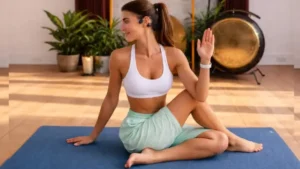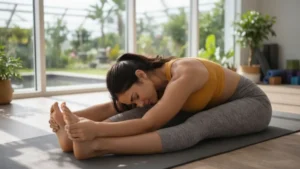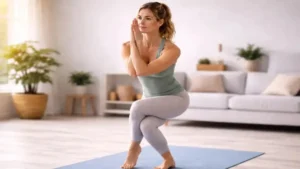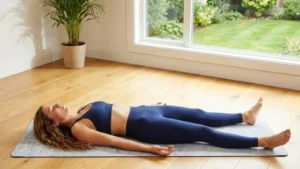
Healthy joints play an important role in keeping the body active, comfortable, and independent. Everyday movements like walking, bending, or turning your neck rely on strong and flexible joints. However, long hours of sitting and lack of movement can gradually lead to stiffness and reduced mobility. Practicing slow and mindful yoga movements can gently support joint health by improving circulation, strengthening surrounding muscles, and maintaining flexibility without putting stress on the body.
Here are nine simple yoga movements that help keep your joints healthy and mobile.
1. Neck Rolls
Neck Rolls are a gentle movement that helps release tension in the neck.

How to do it:
Sit comfortably with a straight spine. Slowly drop your right ear toward your right shoulder. Let your chin move down toward your chest and slowly roll it to the left side. Continue moving in a slow half circle. Take 5 slow breaths and then change direction.
Tip:
Avoid dropping your head completely backward to protect your neck.
Benefits:
This movement helps relieve neck stiffness and improves neck mobility.
Many people who spend long hours at a desk find that neck rolls help reduce tension headaches and neck tightness.

2. Shoulder Circles
Shoulder Circles help improve movement in the shoulder joints.
How to do it:
Sit or stand upright. Inhale as you lift your shoulders toward your ears. Exhale while rolling them back and down. Repeat this movement for about 10 slow circles, then change direction.
Benefits:
This exercise improves shoulder flexibility and helps maintain better posture.
It is especially helpful for people who spend many hours working on computers.
3. Wrist Rotations
Wrist Rotations are useful for keeping the wrists flexible.
How to do it:
Extend your arms forward and make gentle fists. Slowly rotate your wrists in circles for about 10 seconds in one direction, then switch directions.
Benefits:
This movement helps reduce stiffness and supports wrist flexibility.
People who type frequently often find that wrist rotations help relieve tension in the hands and wrists.
4. Cat-Cow Flow
Cat-Cow Flow gently moves the spine and supports back flexibility.
How to do it:
Come onto your hands and knees with wrists under shoulders and knees under hips. Inhale as you arch your back and lift your chest. Exhale while rounding your spine and bringing your chin toward your chest. Continue slowly for 8 to 12 rounds.
Alignment tip:
Keep your movements slow and coordinated with your breathing.
Benefits:
This movement improves spinal mobility and helps reduce stiffness in the back.
5. Hip Circles
Hip Circles help keep the hip joints mobile and relaxed.
How to do it:
Stand upright with your hands resting on your hips. Slowly move your hips in a circular motion for about 10 seconds in one direction and then reverse.
Benefits:
This movement improves hip flexibility and reduces tension in the lower back.
Slow hip circles also help improve blood flow around the hip joints.
6. Low Lunge
Low Lunge stretches the hips and supports knee mobility.
How to do it:
Step your right foot forward and lower your left knee to the floor. Lift your chest and hold the position for about 5 slow breaths. Repeat on the other side.
Alignment tip:
Keep your front knee aligned directly above your ankle.
Beginner tip:
Place your hands on yoga blocks if you need extra balance.
Benefits:
Low lunge improves hip flexibility and helps reduce stiffness caused by long periods of sitting.
7. Gentle Knee Lifts
Gentle Knee Lifts help strengthen the muscles around the knees.
How to do it:
Stand upright and slowly lift one knee toward your chest. Hold briefly, then lower it back down. Repeat this movement about 8 times on each side.
Benefits:
This movement strengthens the muscles that support the knee joint and improves balance.
It is a simple exercise that supports healthy knee movement.
8. Ankle Rotations
Ankle Rotations help keep the ankles flexible and strong.
How to do it:
Sit comfortably and extend one leg forward. Slowly rotate your ankle in circles for about 10 seconds in each direction. Repeat with the other leg.
Benefits:
This movement improves ankle flexibility and reduces stiffness.
Healthy ankles help support better walking and balance.
9. Child’s Pose
Child’s Pose is a gentle resting stretch for the body.
How to do it:
Kneel on the floor and sit back on your heels. Fold your torso forward and rest your forehead on the floor. Breathe slowly and stay in this position for about one minute.
Benefits:
This pose stretches the hips, knees, and ankles while also calming the mind.
Many people find that ending a yoga session with Child’s Pose helps the entire body relax and release tension.
Final Thoughts
Keeping your joints healthy does not require intense exercise. Gentle and consistent movement is often the most effective way to maintain joint comfort and mobility. These nine slow yoga movements help increase circulation, maintain flexibility, and strengthen the muscles that support your joints.
Practicing these movements for 15 to 20 minutes a day can gradually reduce stiffness, improve balance, and support better overall movement. Move slowly, breathe deeply, and listen to your body. With regular practice, these simple exercises can help keep your joints strong and comfortable for many years.