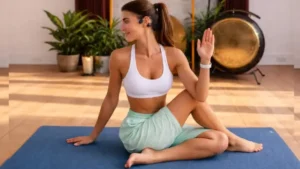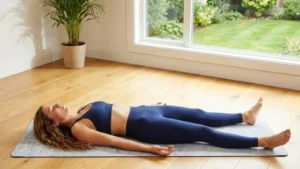
In today’s fast-paced world, many people spend long hours sitting, scrolling, or working at a desk. Over time, this lifestyle can lead to stiff muscles, poor posture, and reduced stability. Balance and flexibility are not just for athletes—they are essential for everyday activities like walking, bending, and climbing stairs. When your body moves with ease and control, you feel more confident and less prone to injuries. Yoga offers a simple and effective way to improve both balance and flexibility without intense workouts. With regular practice, even basic poses can strengthen stabilizing muscles, increase joint mobility, and improve overall body awareness.
1. Mountain Pose (Tadasana)
Mountain Pose may look simple, but it forms the foundation for all standing yoga poses. In this posture, you stand tall with your feet hip-width apart, pressing evenly through both feet while lengthening your spine. This pose improves posture and teaches body awareness. By engaging your thighs and core while relaxing your shoulders, you develop subtle muscle control that supports better balance. Practicing Mountain Pose regularly trains you to distribute weight evenly, which is essential for preventing strain and instability in daily movements.
2. Tree Pose (Vrksasana)
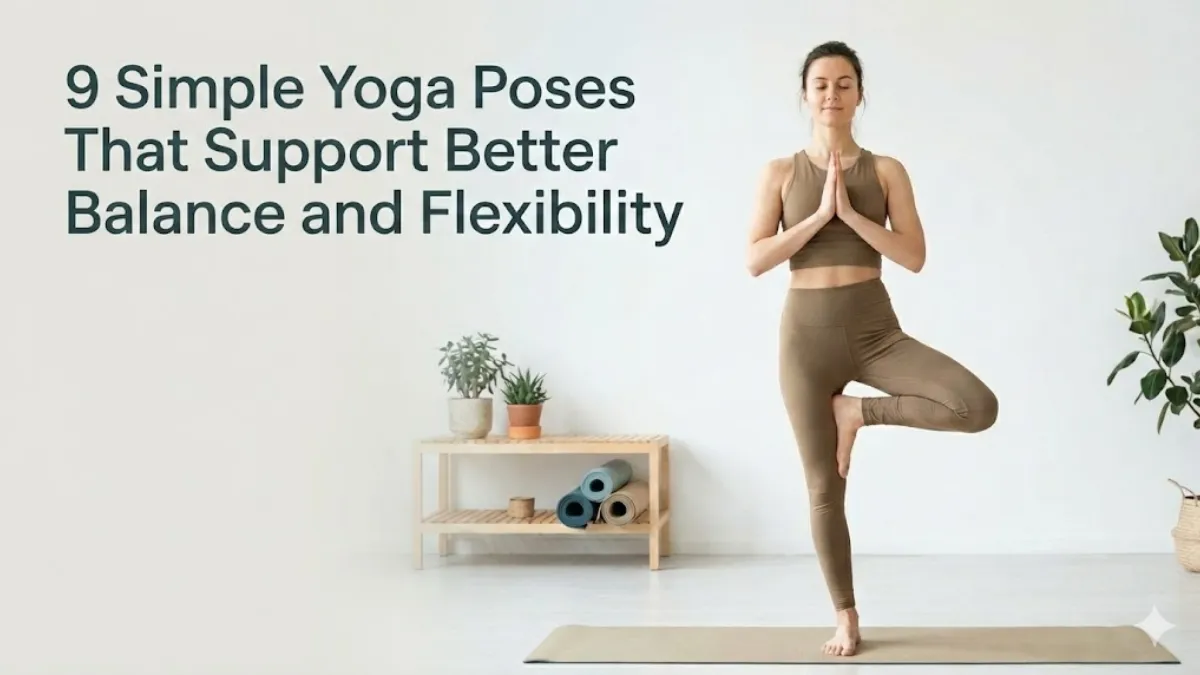
Tree Pose is one of the most effective beginner balance poses. Standing on one leg challenges your ankle strength and improves focus. As you place one foot on your inner thigh or ankle and bring your hands together at your chest, your body learns to stabilize itself. This posture strengthens the legs while gently opening the hips. Maintaining steady breathing during Tree Pose enhances concentration and coordination, both of which are key elements of good balance.

3. Warrior II (Virabhadrasana II)
Warrior II builds lower body strength while increasing hip flexibility. By stepping one foot back and bending the front knee, you create a strong and stable base. Extending your arms and keeping your torso upright engages your core muscles and improves posture. This pose stretches the inner thighs and hip muscles, areas that often become tight from prolonged sitting. The combination of strength and stretch makes Warrior II highly effective for supporting stability and flexibility together.
4. Triangle Pose (Trikonasana)
Triangle Pose improves flexibility along the sides of the body and in the hamstrings. When you reach forward and lower your hand toward your shin while extending the opposite arm upward, you lengthen the spine and open the hips. This pose enhances lateral stability, which helps prevent imbalance during side-to-side movements. It also promotes better spinal alignment and mobility, making it beneficial for people who experience back stiffness.
5. Downward-Facing Dog (Adho Mukha Svanasana)
Downward-Facing Dog is a full-body stretch that strengthens and lengthens at the same time. By lifting your hips toward the ceiling and pressing your hands and feet into the mat, you stretch your hamstrings, calves, and shoulders. This pose improves flexibility in the back body while building shoulder and arm strength. It also encourages better circulation and posture. With consistent practice, Downward-Facing Dog helps reduce tightness caused by long periods of inactivity.
6. Chair Pose (Utkatasana)
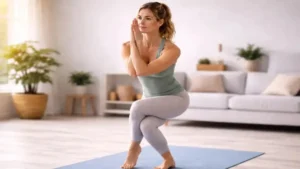
Chair Pose strengthens the muscles that support knee and ankle stability. By bending your knees as if sitting in an invisible chair and raising your arms overhead, you activate your thighs, core, and back muscles. This pose improves endurance and balance because it requires control and steady breathing. Strong leg muscles are essential for maintaining stability during walking, running, and climbing stairs. Chair Pose also helps correct posture by encouraging an upright spine.

7. Seated Forward Fold (Paschimottanasana)
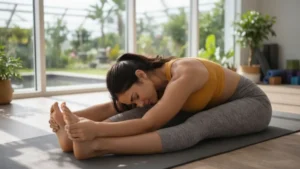
Seated Forward Fold is a gentle yet effective stretch for the hamstrings and lower back. Sitting with legs extended and folding forward while keeping the spine long helps release tension in the back body. This pose improves flexibility gradually and safely when practiced without forcing the stretch. It also promotes relaxation and mindful breathing, reducing stress that can contribute to muscle tightness. Increased hamstring flexibility supports smoother movement and reduces strain on the lower back.
8. Bridge Pose (Setu Bandha Sarvangasana)
Bridge Pose strengthens the glutes and lower back while improving spinal flexibility. Lying on your back with knees bent and lifting your hips upward engages important stabilizing muscles. This pose opens the chest and stretches the hip flexors, which often become tight from sitting. By improving hip mobility and strengthening the posterior chain, Bridge Pose supports better posture and reduces the risk of imbalance.
9. Eagle Pose (Garudasana)
Eagle Pose challenges coordination and joint mobility. By wrapping one leg over the other and crossing your arms, you create a compact posture that strengthens ankles and improves focus. This pose enhances joint stability while stretching the shoulders and upper back. Maintaining balance in Eagle Pose requires mental concentration and steady breathing, which improves overall body control. Practicing this posture regularly builds confidence in single-leg stability.
How to Practice Safely and Effectively
To gain noticeable benefits, practice these poses three to five times per week. Hold each posture for about 20 to 40 seconds while breathing slowly and steadily. Avoid pushing into sharp pain; mild tension is normal, but discomfort is not. Using props such as blocks or practicing near a wall can provide additional support. Warming up before deep stretches also helps prevent injury. Remember, consistency matters more than intensity.
Conclusion
Improving balance and flexibility does not require complex routines or advanced techniques. These nine simple yoga poses provide a practical and effective way to strengthen stabilizing muscles, increase mobility, and enhance posture. When practiced regularly, they support everyday movements and reduce stiffness caused by modern sedentary lifestyles. Over time, you may notice smoother transitions between activities, better coordination, and greater physical confidence. Yoga is a sustainable practice that encourages mindful movement and long-term joint health. By dedicating just a few minutes each day, you can build a stronger, more flexible body that supports you in every stage of life.